


Get a Recommendation
Tell us the floor. We'll specify the machine.
Tell us about the site and what you need cleaning. We’ll recommend the machines worth considering.

TRUSTED BY:














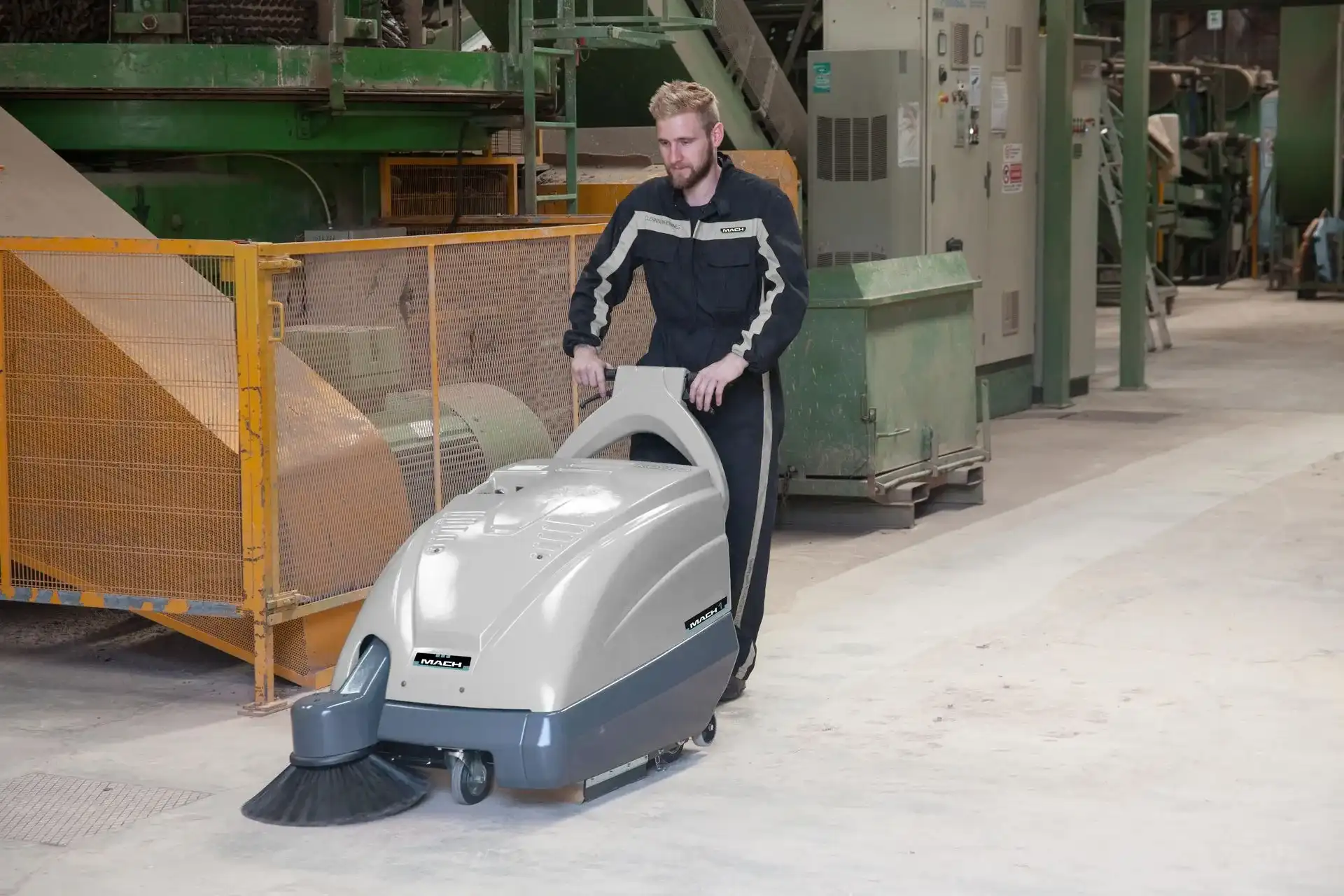
Production floors rarely offer the clear runs a warehouse does. Machine guarding, benches, pallets and work in progress break the floor into short passes, so manoeuvrability usually beats raw width — a compact machine that reaches everywhere cleans more floor than a big one that has to be walked around obstacles.
What is on the floor decides the machine type. Dry swarf, offcuts, packaging and grinding dust go to a sweeper, which lifts them into a hopper and filters the dust it disturbs. Oil, coolant and ground-in soiling need a scrubber-dryer, and the squeegee rubber has to suit an oily floor or it will streak — a grade we specify rather than assume.
Where swarf is heavy the practical answer is often both: sweep the debris first so the scrubber-dryer is not dragging metal across a finished surface and chewing through brushes. Tell us what your process puts on the floor and we will spec the brush and blade grades with the machine.
Showing 7 machines suited to this environment


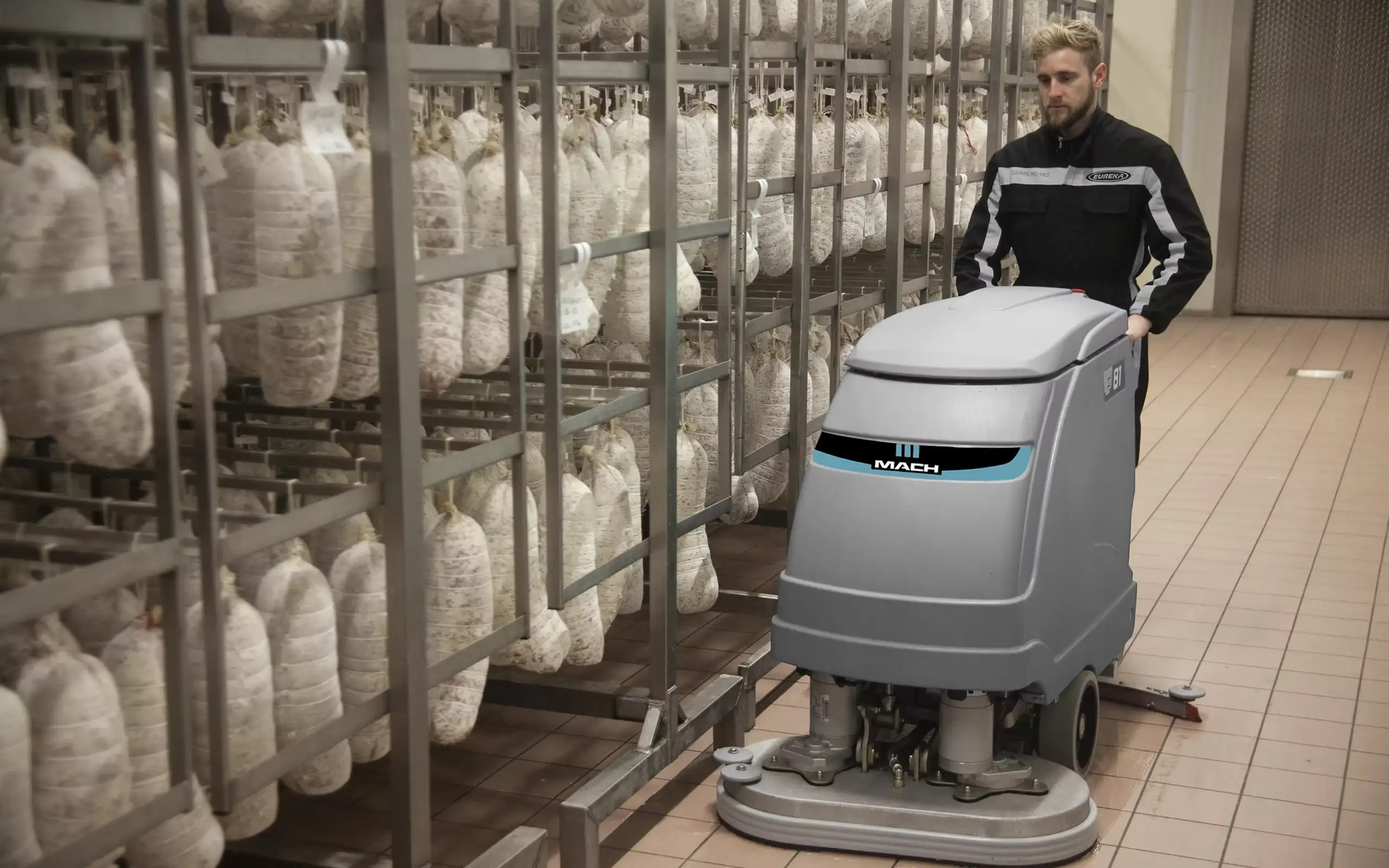
The M500 is a walk-behind scrubber-dryer with a 500 mm cleaning path and up to 2,000 m²/hour productivity, built for high-traffic floors. Mechanical, electronic-free controls keep training and maintenance minimal.


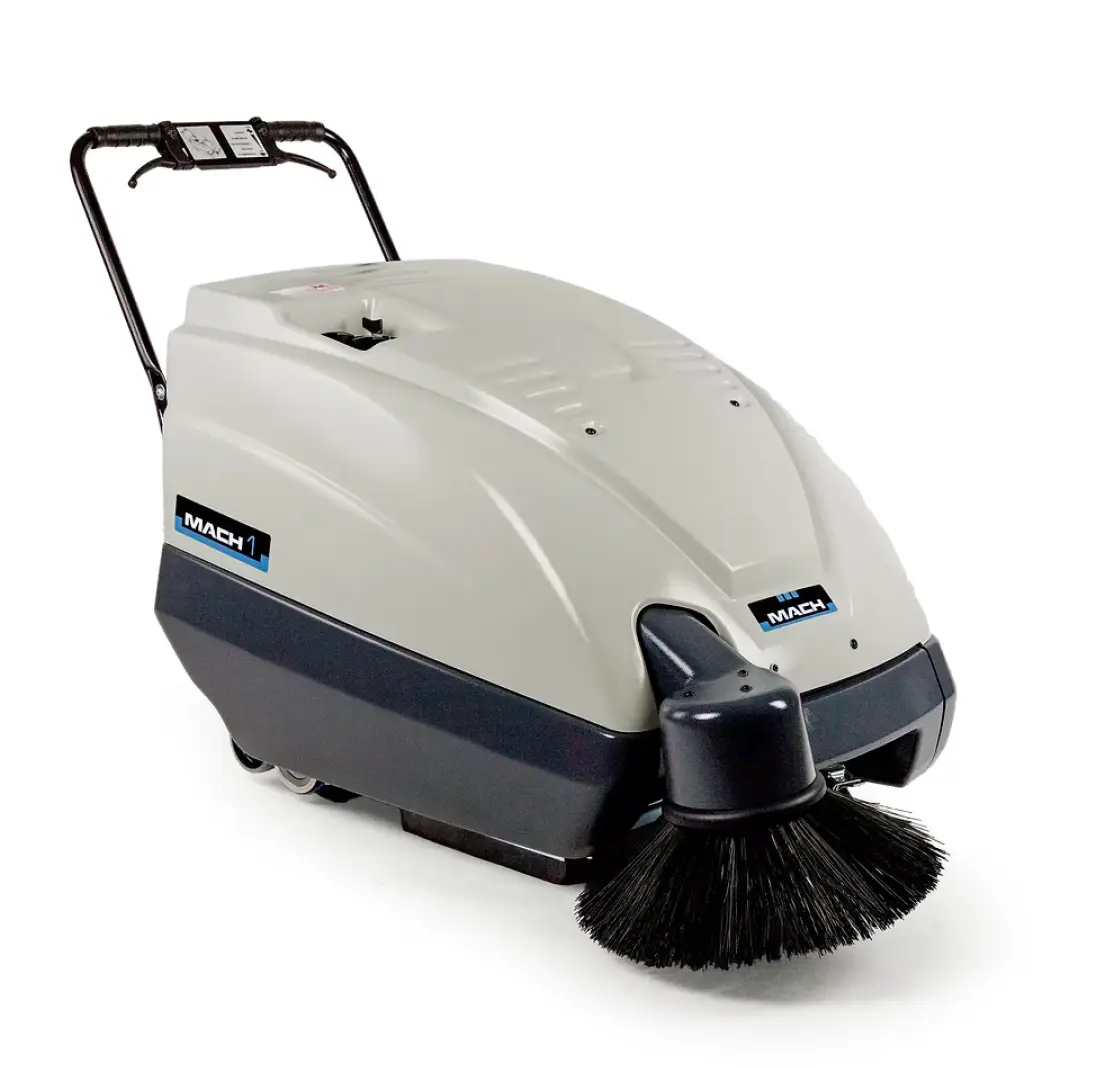
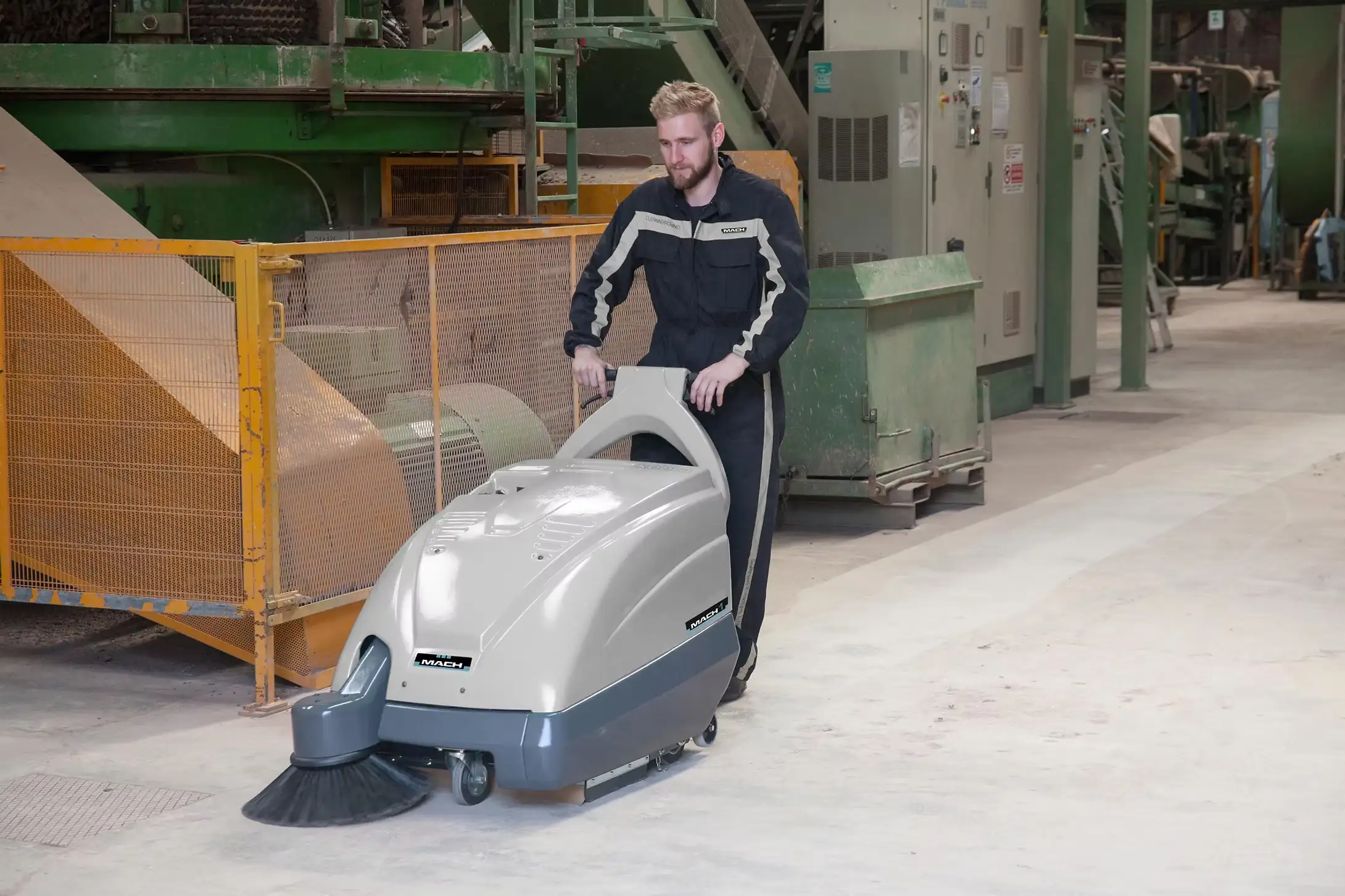
A sweeper. Swarf is dry debris, and a sweeper lifts it into a hopper rather than pushing it around — the MACH 1 for smaller or congested shops, the MACH 2 or MACH 3 PRO where there is room to ride. Running a scrubber-dryer over loose swarf drags metal across the floor and wears the brushes out early, so sweep first if both are needed.
That is scrubber-dryer work, and the squeegee rubber grade matters more than the machine. Standard rubber on an oily floor is what most streaking complaints come down to; we specify an oil-resistant grade for the floor you actually have. Replacement blades and brushes come from us too — see spare parts and consumables.
Usually yes, but the answer comes from the floor rather than a brochure. Walk-behind machines turn in their own length and get between benches and guarding where a ride-on cannot. We will walk the route an operator would take and size it from that — free of charge, anywhere in the UK.
The battery machines here run with no fumes and at a noise level people can work alongside, so cleaning can happen around production rather than waiting for a shutdown. A sweeper filters the dust it lifts rather than redistributing it, which matters on a floor where people are working.
Tell us about the site and what you need cleaning. We’ll recommend the machines worth considering.