


Get a Recommendation
Not sure which machine you need?
Tell us about the site and what you need cleaning. We’ll recommend the machines worth considering.

TRUSTED BY:













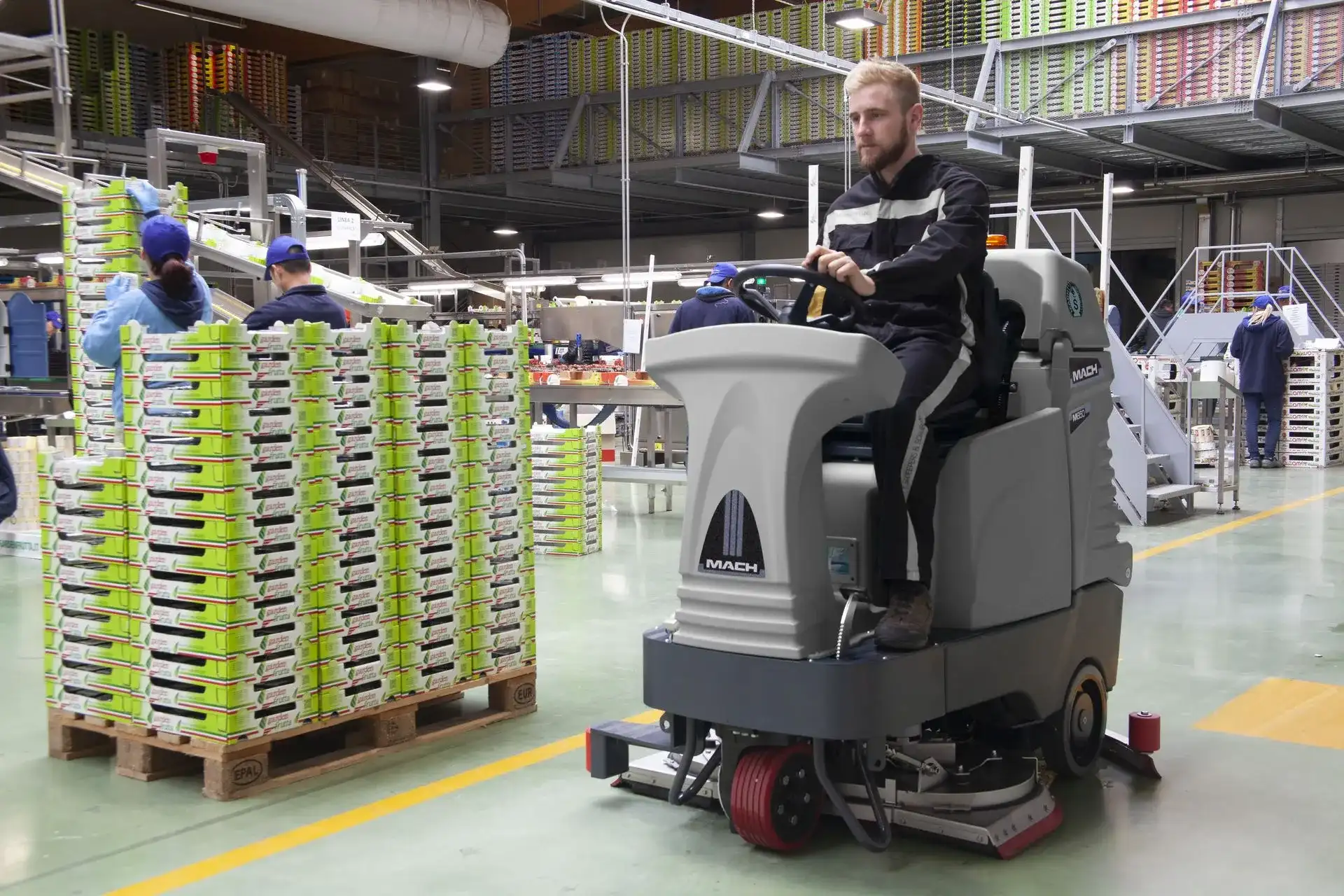
Past a few thousand square metres, the limit on a scrubber-dryer is not deck width but how long an operator can keep walking. A ride-on removes that: the three M-series machines here clean 760 to 960 mm a pass at 6 to 7.5 km/h, which is 4,560 to 7,200 m² an hour of washed and dried floor from one person and one pass.
They carry the tank capacity to match — 110 to 120 litres of solution and 125 to 135 litres of recovery — so a full shift's cleaning is not broken up by refills. That capacity has weight behind it, from 350 kg on the M750 to 643 kg on the M1000, so floor loading, ramp gradients and door widths are worth checking before the machine arrives rather than after.
If the floor is congested rather than open, the pedestrian machines will get closer to the obstacles — see walk-behind scrubbers, or the full floor scrubbers range. Buy or hire.
Showing 3 ride-on scrubber-dryers


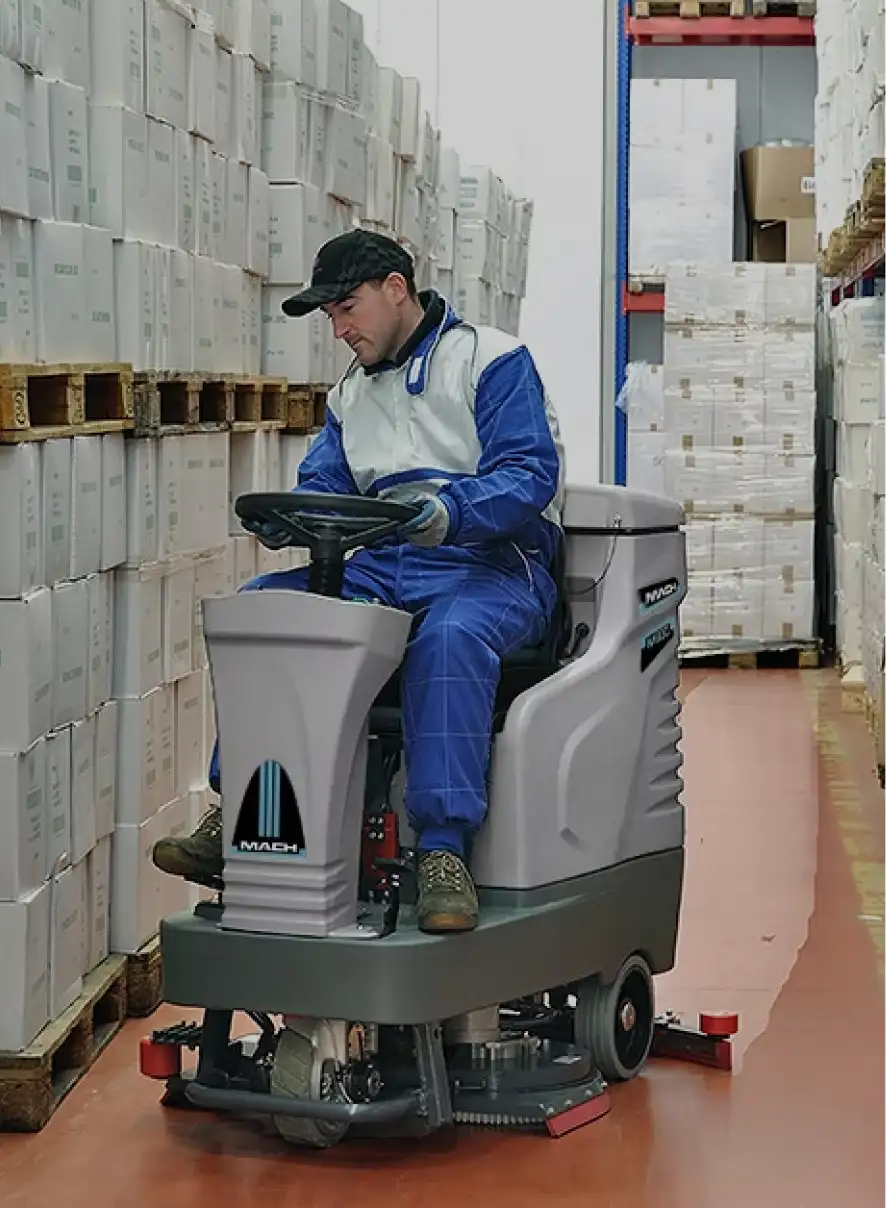

When a ride-on pays, and how the three M-series machines differ

When the clean stops fitting in the time you have. The largest walk-behind here is rated at 3,650 m² an hour; the M750 starts at 4,560 and the M1000 reaches 7,200. Take your floor area, divide by the rated output, then add a margin for turns and congestion — if the honest figure runs past the shift window, or past what one operator can walk, the seated machine is the cheaper answer even before you count labour.
Path width and control philosophy. The M750 cleans 760 mm and is built around simple, reliable operation; the M830 cleans 830 mm with completely mechanical, electronic-free controls, which suits sites that want the least to go wrong; the M1000 is the high-capacity machine at 960 mm and 7,200 m² an hour, with a 1,120 mm squeegee and a 120-litre solution tank behind it.
They are straightforward to drive — the M750 and M830 top out at 6 km/h and the M1000 at 7.5 km/h — but they are 350 to 643 kg of machine sharing a floor with pedestrians and fork-lift traffic, so operators should be trained on the machine and on your site rules before they use one. We cover the machine side at handover; the site rules are yours to set.
All three carry an on-board 24 V charger, so the machine plugs into a normal socket wherever it is parked rather than needing a dedicated charging installation. Actual charge time depends on the battery set specified with the machine — tell us your shift pattern and we will size the batteries so the machine is ready when the next round starts.
Tell us about the site and what you need cleaning. We’ll recommend the machines worth considering.