


Get a Recommendation
Not sure which machine you need?
Tell us about the site and what you need cleaning. We’ll recommend the machines worth considering.

TRUSTED BY:














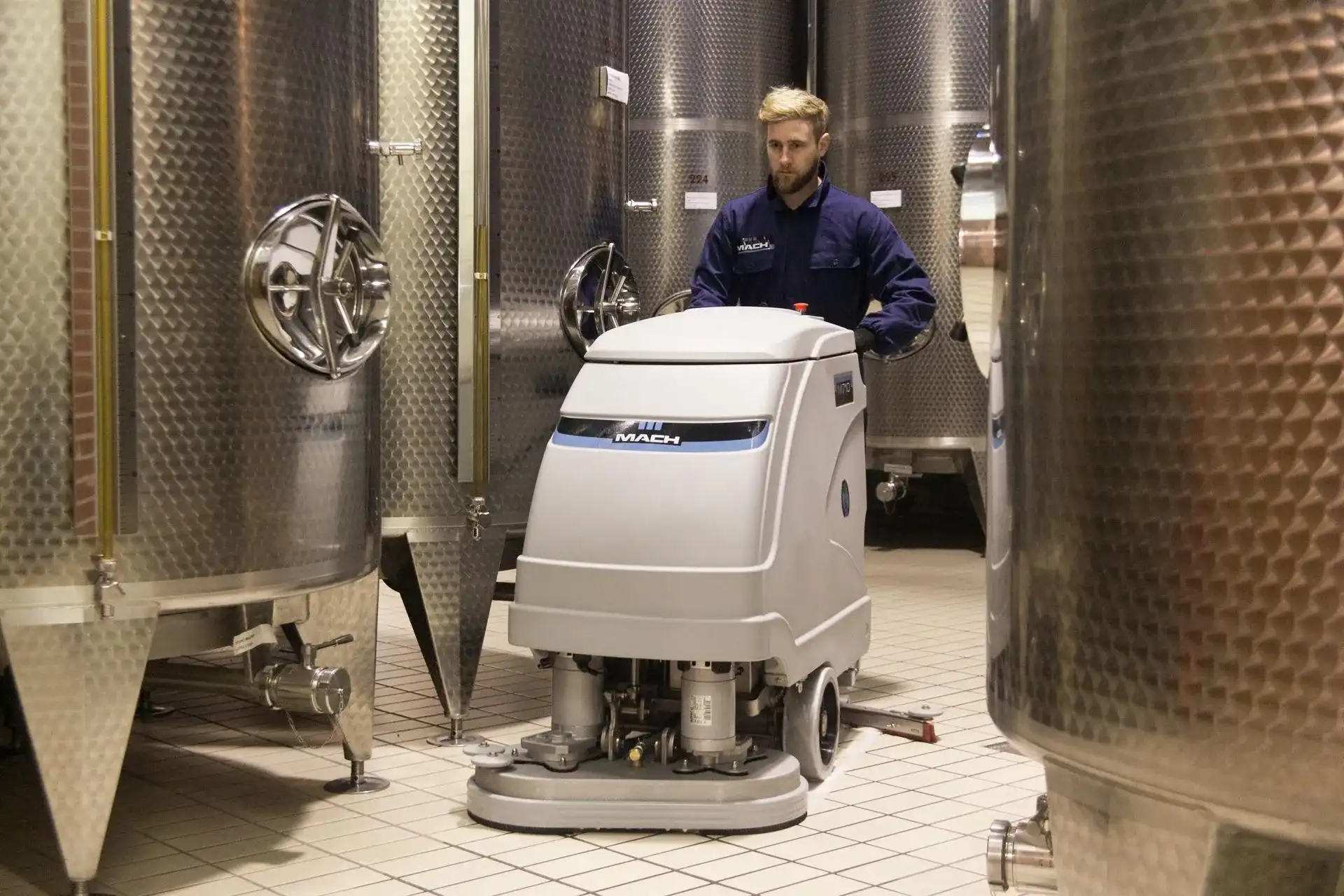
A scrubber-dryer lays down water and detergent from a solution tank, scrubs the floor with a rotating brush or pad, then lifts the dirty water straight back off through a rear squeegee into a separate recovery tank. The floor is dry behind the machine, so the area reopens immediately — no cordoning off, no mop-and-wait, and no dirty water pushed around the way a mop and bucket does.
The 7 M-series machines below cover cleaning paths from 360 mm to 960 mm and rated outputs from 1,250 to 7,200 m² an hour, all battery-powered with on-board chargers, so they run indoors with no fumes and no trailing cable. Sizing is mostly about the floor: a wider deck cleans faster but needs the aisle width and turning room to use it.
Choose by format — walk-behind scrubbers for tighter, more congested layouts, ride-on scrubbers for large open floors — or send us your floor plan and we'll recommend one. Buy or hire.
Showing all 7 M-series scrubber-dryers

The M500 is a walk-behind scrubber-dryer with a 500 mm cleaning path and up to 2,000 m²/hour productivity, built for high-traffic floors. Mechanical, electronic-free controls keep training and maintenance minimal.


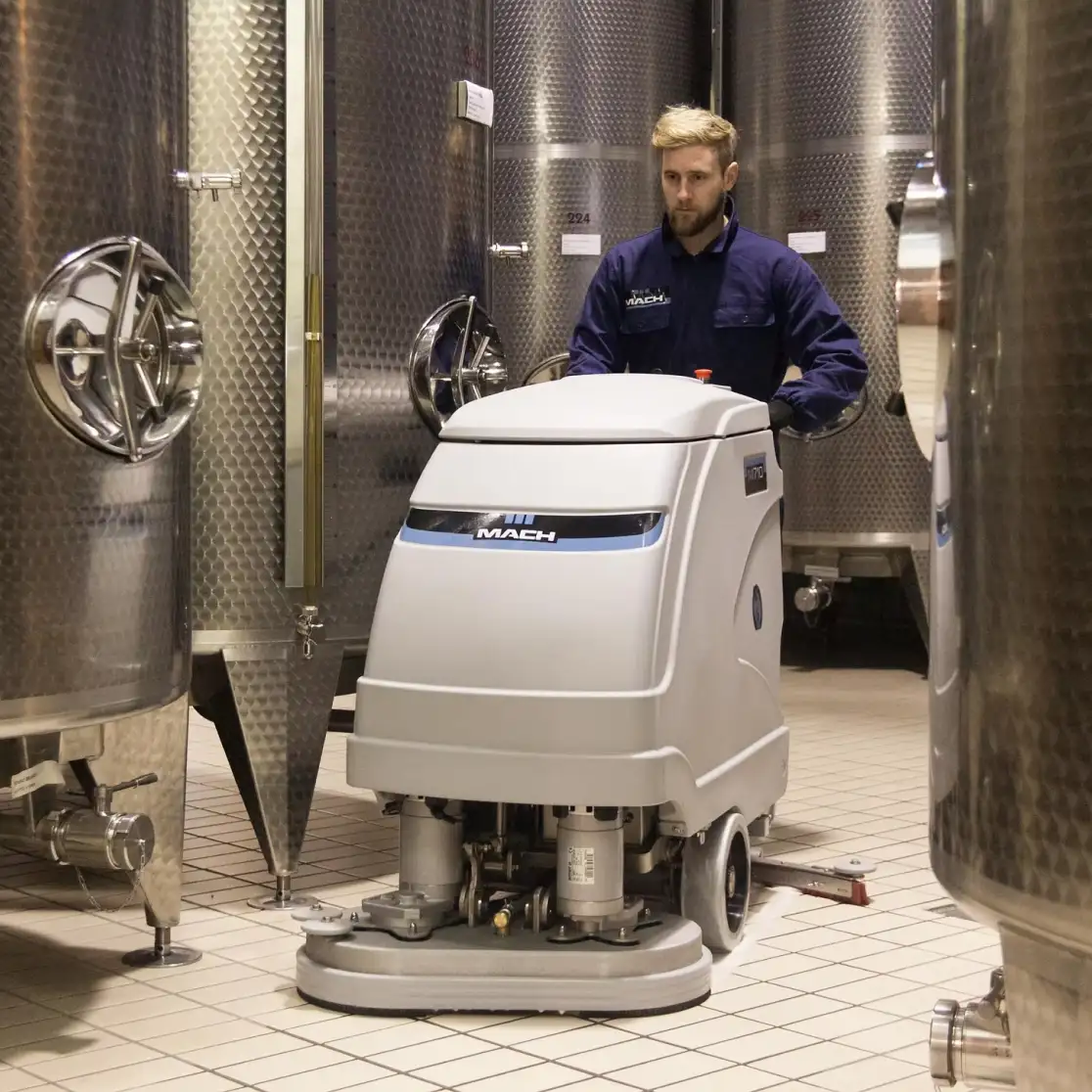
A squeegee blade trails behind the brush deck and a vacuum motor pulls the used solution up through it into the recovery tank. The recovery tank is deliberately the larger of the two — 135 litres against a 120-litre solution tank on the M1000, for example — because it has to take everything you put down plus what it lifts off the floor. Get the squeegee blades worn or badly adjusted and drying is the first thing to suffer, which is why they are a routine wear part.
Divide the solution tank by how heavily you dose the floor. The compact M360 carries 14 litres, the M500 40 litres, the M710 and M810 75 litres, and the M750, M830 and M1000 between 110 and 120 litres. A bigger tank means fewer trips to the tap, but also a heavier machine — the M360 weighs 63 kg, the M1000 643 kg — so tank size is as much a question of your floor and access as of run time.
Sealed concrete, resin, tiled and vinyl floors are all normal duty for these machines; the variable is the brush or pad you fit and the detergent you use, not the machine. Very rough or heavily profiled concrete, and floors with standing solid debris, need a different approach — sweep first, then scrub. Tell us the surface and what is on it and we will specify the brush and pad grade with the machine.
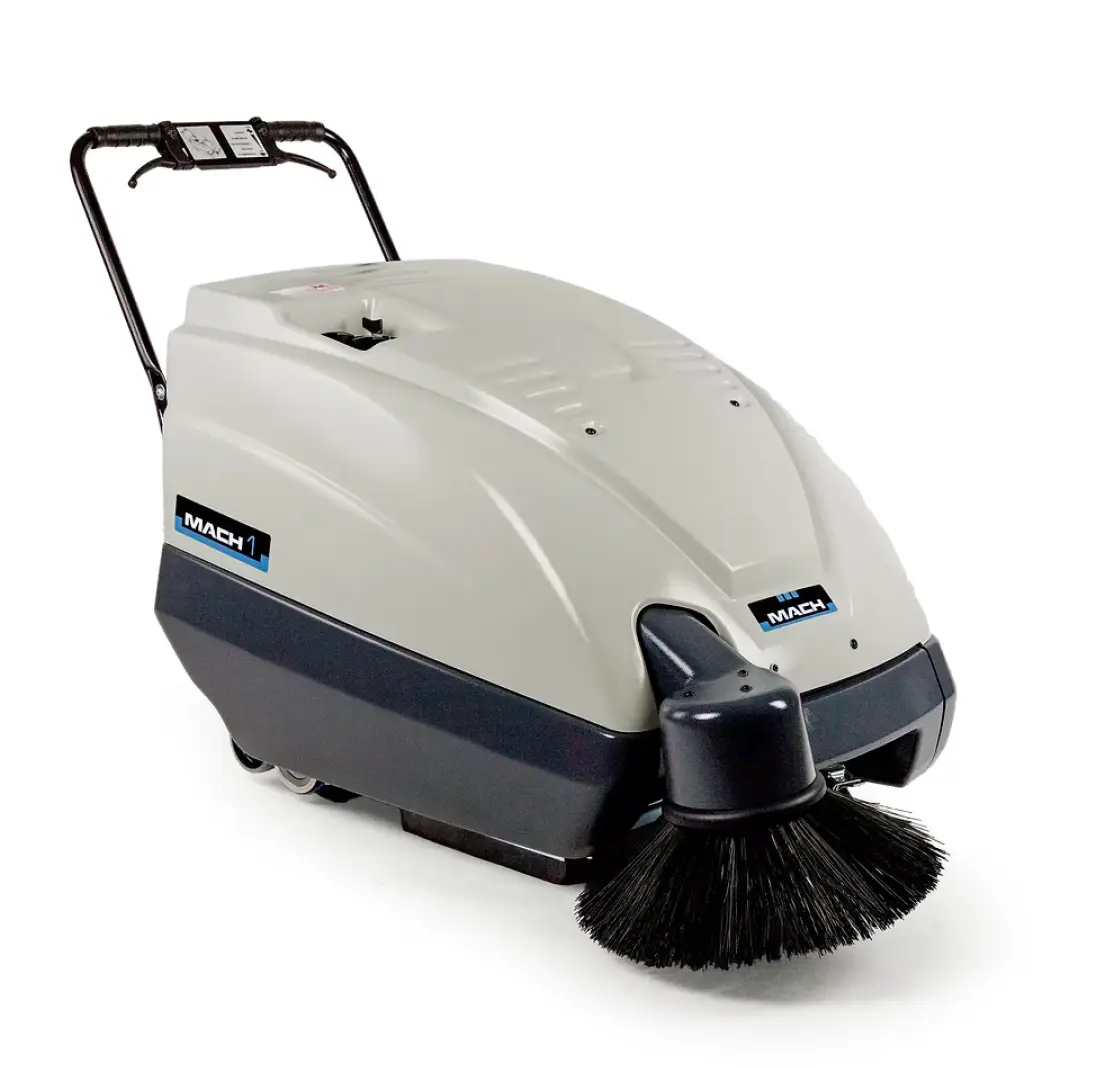
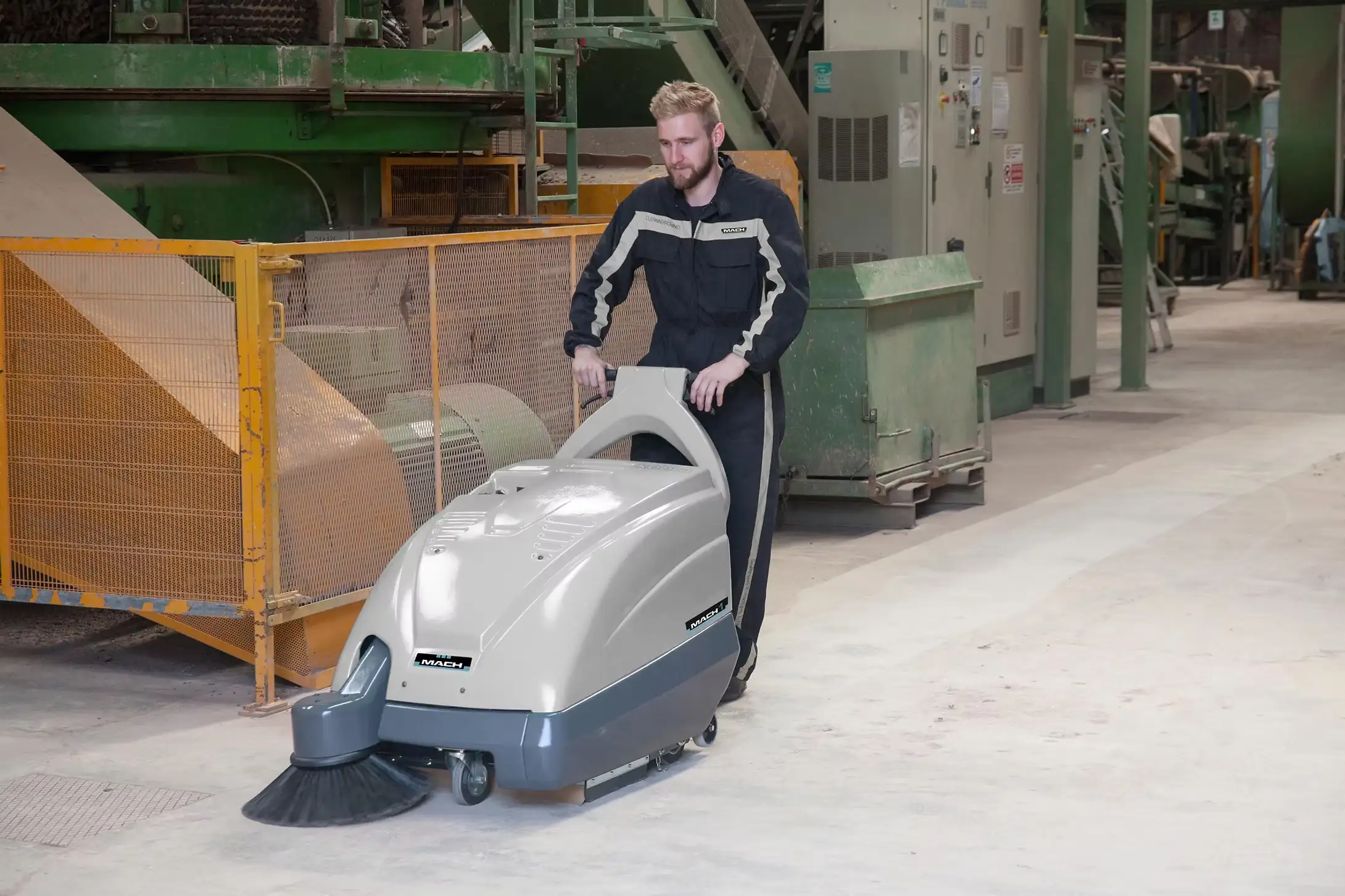
If the floor carries loose debris, yes. A scrubber-dryer is designed to remove soiling and spills, not grit, packaging and swarf — those clog the recovery path and wear the brushes. On sites with both problems the usual pattern is a sweeper for the yard and the warehouse, a scrubber-dryer for finished indoor floors. See our industrial floor sweepers for the dry side of that job.
Tell us about the site and what you need cleaning. We’ll recommend the machines worth considering.